
 Canada
  Alberta
  British Columbia
  Manitoba
 New Brunswick
  Newfoundland Labrador
  Nova Scotia
  Ontario
  Prince Edward Island
  Quebec
  Saskatchewan
  United States
  Belgium
 France
  Italy
Italy  Switzerland
Elsewhere
 Elsewhere
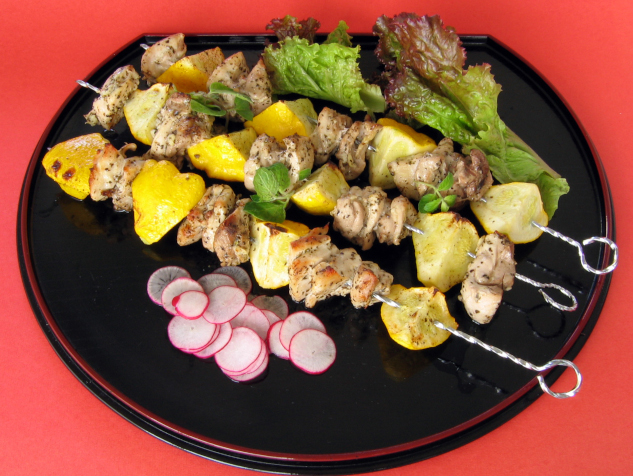
Chicken shish taouk skewers, teriyaki pork chops, honey marinated salmon … so many mouthwatering grilled dishes. What do these dishes have in common? They all require a marinade to add flavor and tenderize the meat. But beware, a poorly planned marinade can lead to disastrous results. Here, we’ll give you the basics for perfect marinades every time.

Essentially, it’s a liquid mixture containing various aromatics and often an acidic element, in which food is soaked before cooking. Its main purpose is to enhance the flavor of the food, but also to partially tenderize it by initiating the breakdown of fats. This can be achieved with acidic ingredients like vinegar, wine, lemon/citrus juice, yogurt, or with enzymatic components such as pineapple, papaya, or ginger. The breakdown of fats allows fluids and seasonings to penetrate the meat, helping it retain its moisture during grilling and preventing it from drying out too quickly. Of course, this can only work on the surface of the meat.
Another important reason to marinate meats with an acidic element is this: The intense heat from barbecue grills can cause carcinogenic compounds to form on the surface of food during cooking. An acidic marinade limits the formation of these substances.
Marinating should be done long enough to infuse flavor, but not excessively. The salt, along with the herbs, spices, garlic, and onion, gradually penetrates the surface of the food, giving it flavor. The acidic ingredient will tenderize the meat, but if left too long, it will change its appearance and give it an unpleasant sour taste. The suggested marinating times below take into account the hardiness of the food and its ability to withstand the intensity of the acidic ingredient. If the marinade is mainly composed of oil and aromatics, with little acidity, the marinating time can be longer.
Marinade comes into contact with raw meat, fish, and seafood, and therefore absorbs bacteria from these products. Always discard marinade after use and do not use it to baste food during cooking. You should keep a separate portion, untouched by raw food, for basting or making sauces.


See more recipes featuring marinades





Leave a Reply